Five Are Killed in Pennsylvania Helicopter Crash

NOXEN, Pa. — A helicopter crash in a remote, wooded area of northeastern Pennsylvania killed five people, the State Police said on Sunday.The crash was believed to have occurred on Saturday night after radar and communication contact with the helicopter was lost, according to the Federal Aviation Administration. The helicopter had taken off from central New York State with five people on board, the F.A.A. said.
Trooper Adam Reed confirmed that five people died in the crash near Noxen, in Wyoming County, but said he did not have additional information on the victims.
He said inclement weather had hampered search efforts.
Personnel from the State Police and the F.A.A. were at the scene on Sunday night, according to Trooper Reed. There was no immediate response to a message left for the Wyoming County coroner.
The F.A.A. said the helicopter took off from Greater Binghamton Airport, but officials there said it had left from a smaller airfield nearby, Tri Cities Airport in Endicott.
A phone call to Tri Cities Airport was not immediately returned on Sunday night.

Egypt’s Ruling Military Kills Scores of Islamists at Rally

CAIRO — The Egyptian authorities unleashed a ferocious attack on Islamist protesters early Saturday, killing at least 72 people in the second mass killing of demonstrators in three weeks and the deadliest attack by the security services since Egypt’s uprising in early 2011.The attack provided further evidence that Egypt’s security establishment was reasserting its dominance after President Mohamed Morsi’s ouster three weeks ago, and widening its crackdown on his Islamist allies in the Muslim Brotherhood. The tactics — many were killed with gunshot wounds to the head or the chest — suggested that Egypt’s security services felt no need to show any restraint.
“They had orders to shoot to kill,” said Gehad el-Haddad, a Brotherhood spokesman. The message, he said, was, “This is the new regime.”
In Washington, Secretary of State John Kerry called this “a pivotal moment for Egypt” and urged its leaders “to help their country take a step back from the brink.”
The killings occurred a day after hundreds of thousands of Egyptians marched in support of the military, responding to a call by its commander for a “mandate” to fight terrorism. The appeal by Gen. Abdul-Fattah el-Sisi, who has emerged as Egypt’s de facto leader since the military removed Mr. Morsi from power, was widely seen as a green light to the security forces to increase their repression of the Islamists.
In the attack on Saturday, civilians joined riot police officers in firing live ammunition at the protesters as they marched toward a bridge over the Nile. By early morning, the numbers of wounded people had overwhelmed doctors at a nearby field hospital.
One doctor sat by himself, crying as he whispered verses from the Koran. Nearby, medics tried to revive a man on a gurney. When they failed, he was quickly lifted away to make room for the many others.
With hundreds of people gravely wounded, the toll seemed certain to rise, and by Saturday evening had already surpassed the more than 60 deaths on July 8, when soldiers and police officers fired on pro-Morsi demonstrators.
As the deaths have mounted, more than 200 since the government was overthrown, hopes have faded for a political solution to the standoff between the military and the Brotherhood, whose leaders, including Mr. Morsi, are imprisoned or preparing themselves for jail.
In a televised news conference hours after the clash, Interior Minister Mohamed Ibrahim absolved his men of any responsibility and made no mention of the high death toll. His officers, he said, “have never and will never shoot a bullet on any Egyptian.”
He blamed Mr. Morsi’s supporters for the violence, saying they planned to disrupt traffic on the bridge. “We had to stop them,” Mr. Ibrahim said. The protesters threw rocks and fired weapons, he said, and a large number of officers were wounded, including two who were shot in the head.
Mr. Ibrahim also suggested that further repression was imminent as the authorities prepared to break up sit-ins that thousands of Mr. Morsi’s supporters have held for weeks.
“God willing, it will be dispersed in a way that doesn’t cause many losses,” he said. “But God willing, it must end.”
Mohamed ElBaradei, the Nobel Peace Prize laureate who is vice president in the interim government, added a rare note of support for the Brotherhood from the country’s new leaders, writing on Twitter that he condemned the “excessive use of force” and was trying to “end the standoff in a peaceful manner.”
Mr. Kerry called on Egypt’s leaders to “respect the right of peaceful assembly and freedom of expression” and to open an inclusive political dialogue.
“Over two years ago, a revolution began,” he said in a statement. “Its final verdict is not yet decided, but it will be forever impacted by what happens right now.”
Secretary of Defense Chuck Hagel spoke by telephone with General Sisi, urging him to exercise restraint and “take steps to prevent further bloodshed and loss of life,” according to a Pentagon statement.
The violence broke out on Friday night after a day of large, competing marches by supporters of Mr. Morsi and his opponents expressing solidarity with the military. At least eight people died on Friday, but there was not the kind of widespread violence that many had feared after General Sisi’s speech on Wednesday calling for demonstrations in support of the military.
That changed around 10:30 p.m., when groups of Mr. Morsi’s supporters left their vast encampment in Nasr City, marching toward the central October 6 Bridge, where police officers were stationed, according to witnesses. Several people said that the protesters had left the camp because it had become overcrowded, and that people had fanned out from the encampment along several boulevards. Others said they had planned to march through a nearby neighborhood.
The group that came under attack walked down Nasr Street, past the reviewing stand where President Anwar el-Sadat was assassinated in 1981, and the pyramid-shaped memorial to the unknown soldier across the street, toward the bridge.
“We didn’t have any weapons,” said Mohamed Abdulhadi, who said he had joined the march, which was “not violent.” More than 10 other witnesses confirmed his assertion.
The Interior Ministry released a video after the killings that it said showed Morsi supporters firing birdshot at the police and damaging property. It showed protesters throwing rocks, unidentified people wandering into traffic, and one man pulling out what appeared to be a silver pistol and firing it, though it is not clear who the man was, or which side of the fighting he was on.
Mohamed Saeed, an agricultural engineer, said he and some of the other protesters had started to exchange words with the officers before even reaching the bridge.
“You know how it is,” he said. “Some of us said some provocative things, and the tear gas started.”
The protesters threw rocks, and the confrontation quickly escalated, Mr. Saeed and others said. The Morsi supporters feared that the police were preparing to storm their encampment, so they started building brick walls on the road to “to prevent them from coming into the sit-in,” Mr. Saeed said.
An hour and a half after the clashes started, the police and their allies started firing live ammunition and pellet guns, Mr. Saeed said. Other witnesses said they had seen snipers on the roofs of nearby buildings.
Ahmed Hagag was there with his best friend, Ashraf. They had rushed to the front line bearing aid for their comrades, but it was useless given the kind of violence under way. “We went there with masks and vinegar,” he said, in preparation for the tear gas.
Ashraf, who had been “yearning for martyrdom,” did not want to stand in the back, Mr. Hagag said. “So it happened, and a bullet ended up in his heart.”
As the sun rose, a bullet struck Mr. Saeed’s right kidney. An hour later, a path that the protesters had cleared to the field hospital had become a highway for the wounded, who came in ambulances, on motorcycles and in the arms of friends.
A taxi drove by with a shattered rear window, pierced by a bullet that struck the driver in the neck. He declined offers of help and kept driving, blood running onto his shirt.
Before the police retreated around 8 a.m., a spray of gunfire had come from their positions, sending people scrambling for cover and setting off a new cavalcade of ambulances.
In the makeshift morgue at the field hospital, 29 bodies lay in a row covered with white sheets. A medic, Mahmoud al-Arabi, said the wounds were disturbing for their accuracy: many of the dead had been shot in their head, chest or neck.
Their shrouds were marked with names and sometimes the cities they had traveled from to join the Islamists in their square: Saadawy Mohamed from Beni Suef, Khaled Abdel al-Nasser from Qena.
Later Saturday, the Health Ministry said 72 people had been killed. The Brotherhood said it had counted 66 dead and classified an additional 61 people as “clinically dead.”
The violence left the Brotherhood in an increasingly dire position, facing the prospect of a ban of the kind it suffered before the uprising against President Hosni Mubarak. Its options at this point are limited, said Samer S. Shehata, a professor of Arab politics at the University of Oklahoma and an authority on the group.
“They really can’t resort to violence,” he said. “They don’t have a militia and it runs against all their rhetoric and recent history.”
Mr. Ibrahim, the interior minister, raised the prospect of a new threat to the Brotherhood, saying Saturday that he was reconstituting a state security agency that under Mr. Mubarak was responsible for monitoring Islamists and known for carrying out torture and forced disappearances. Without security agencies that have a political focus, Mr. Ibrahim said, “the security of the country doesn’t work.”
Robert F. Worth contributed reporting.
This article has been revised to reflect the following correction:
Correction: July 27, 2013
A summary that appeared briefly with an earlier version of this article misstated the death toll. Dozens of people have been killed by the Egyptian authorities, not hundreds.

3 dead after bus carrying teens returning to church crashes in Indianapolis

(CNN) -- A bus trip back to an Indianapolis church ended in tragedy Saturday afternoon with bloodied bodies, luggage strewn everywhere and three dead, in addition to at least 19 injured, after the vehicle flipped over.
The smashed bus teetered on a concrete barrier -- with a young woman's leg pinned between them, according to witnesses -- as passengers spilled outside in various states of disarray and despair.
"I saw bodies everywhere, kids in shock and disbelief," said John Murphy, who'd stopped along the northern Indianapolis road. "... There was a lot of blood. There was an awful lot of blood."
Indianapolis police spokesman Michael Hewitt said, in addition to the three dead, two seriously injured were helicoptered from the crash scene, eight others were driven to local hospitals and nine others were treated and released on-site.
The bus -- which was carrying about 40 passengers -- is believed to be the only vehicle involved in the crash, according to Hewitt.
Having left from a camp in Michigan, the bus was about a mile from returning to a Baptist church in Indianapolis when it crashed, Mayor Greg Ballard said. Most of those on board were teenagers, according to fire department spokeswoman Rita Burris.
The driver told witnesses afterward that the vehicle's brakes failed as he was trying to make a left turn, she said.
"Please pray for all involved," the Indianapolis Fire Department tweeted.
Mayor: "Pretty tragic accident"
Rose Vorenkamp was driving with Murphy, her fiancée, when she spotted the rolled-over bus and saw "people running" to help. Having been trained through her job in first aid and CPR, she moved closer and saw what she described as a girl trapped under the bus, bloodied passengers with head injuries and at least one person with a dislocated shoulder.
The fire department noted that four passers-by arrived first to help those affected by the accident, including one who helped pull the driver from the bus. It wasn't clear whether Borenkamp was one of those, though Murphy said an off-duty nurse and an EMT were among those at the scene before fire trucks and ambulances arrived.
"What we saw was everybody pulled off to the side of the road, trying to help," Murphy said. "They weren't gawking. There were a lot of people ... in tears."
Those helping eventually were met soon by firefighters and crews from 12 ambulances and four helicopters.
Video from around 5:30 p.m. showed the bus on its side and on a road barrier while first responders massed nearby.
By then, traffic in the area had been shut down and all the casualties had been sent to local hospitals. Family members subsequently gathered at the church, Colonial Hills Baptist, where the bus had been heading.
The scene there was "remarkably positive, very sad, but at the same time very together," said Ballard.
"Some of the teenagers are hurting very badly, you can see it in their faces," the mayor said.
Some people at the church thanked him for visiting and generally appeared strong, Ballard added, surmising that "it's very clear that they are being guided by their faith right now."
Still, the mayor added, they might have some tough days ahead of them.

"The next few days are always very, very painful as they come out of the shock of it," he said.

Royal-baby reveals have come a long way since 1982

The presentation of the prince wasn't much like the way Prince Charles, then 33, and Princess Diana, then 20, showed off their first baby, Prince William, to the world the day after he was born. In fact, what a difference 31 years makes. But the ritual blended tradition and modernity, one of the reasons William and Duchess Kate are so popular with the British and worldwide.
Especially now. Kate, 31, gave birth on Monday to an 8-pound, 6-ounce boy, still unnamed, in the same hospital, St. Mary's, where William was born. She and William, also 31, presented their Baby Prince Cambridge to a wildly excited throng outside the hospital on Tuesday.
Those watching could not help thinking of the day in June 1982 when Charles and Diana performed the same dance for the media. Here's a look at what's changed and what's stayed the same.
THE ENTRANCE
1982: Charles walked out holding baby William, then gave him to Diana
2013: Kate walked out holding her newborn, then gave him to William
Royal remix: The royal one took the lead back then; this new couple is more of an equal partnership.
THE CHATTER
1982: Nothing; they smiled and posed. She later said she was nervous and teary.
2013: Both were practically chatty. Kate said giving birth was an "emotional" and "very special" experience. William joked about the baby's weight, lungs and tardiness, promised a name soon, acknowledged the media mob's long wait and subtly pleaded to be left alone for at least a while.
Royal remix: Even a wary royal like William knows he has to feed the media beast; it's good for the media and for the royals. Charles expected and received more deference in his day. Kate, more than a decade older than Diana at the time, looked relaxed, happy and serene.
THE LOOK
1982: She wore a maternity dress, a voluminous kelly-green smock dress with white polka-dots and a white collar by British designer Catherine Walker. He wore a formal striped suit with a striped tie and blue shirt.
2013: She wore a bespoke crepe-de chine dress of cornflower blue with white polka dots with a belted waist (plainly showing the remains of her baby bump), by British designer Jenny Packham. He wore a casual blue shirt, no tie, dark slacks belted with a worked leather belt.
Royal remix: Packham made it for this occasion, and proudly cooed about it within minutes of the reveal. Walker's dress was a maternity dress that was the only frock Diana had with her at the time of the birth. Charles has been most comfortable in his impeccable suits practically since he was a toddler; William lives in casual wear but dresses up smartly.
THE CROWD
1982: Cheering crowds but a relatively smaller media contingent; there were only two national broadcast networks in Britain at the time.
2013: Huge cheering crowds, clutching camera phones, and a media mob hundreds strong from around the world.
Royal remix: Interest in royal babies remains intense; the technological capacity to indulge that interest has exploded and expanded worldwide.
THE TRANSPORTATION
1982: They both got in the back of a British black luxury car to be driven by chauffeur away from the hospital.
2013: They got into a British black luxury car; he was driving, a security agent in the front seat, and she got in the back with the baby.
Royal remix: William not only likes to drive himself, he's handy with a car seat, prompting speculation about whether he practiced ahead of time. Charles would not have had a clue about car seats.
THE DESTINATION
1982: To their apartment at Kensington Palace
2013: To their apartment at Kensington Palace
Royal remix: The palace once derided as the "aunt heap" by Edward VIII is still the indispensable public housing for high-ranking royals.
THE SIZE OF THE BABY
1982: 7 pounds, 1½ ounces; she labored 16 hours.
2013: 8 pounds, 6 ounces; she labored about 10 hours.
THE VIEW
1982: Could barely be seen in its swaddling blanket, but he was not crying.
2013: Could barely be seen from some angles, but was in full view from other angles. He was awake and not crying, and even sort of gave a little royal wave.
Royal remix: The royal media operation today is more savvy about the positive effects of good camera angles.
THE ACCOUTREMENTS
1982: A white swaddling blanket, in their arms in the car.
2013: A white swaddling blanket, then in a car seat that William carried out of the hospital and placed in the back seat.
Royal remix: Modern royals want their babies to be safe. And the makers of baby products (Britax Baby Safe car seat and aden+anais cotton muslin swaddle) instantly send out messages bragging about their link with royals.
THE BIRTH
1982: Charles was there for it, the first future monarch to witness the birth of his heir; William was the first future monarch to be born in a hospital.
2013: William was there for it. He was the first future monarch to spend the night in the hospital with his wife after the birth of his heir.
Royal remix: The days of royal births taking place only in royal palaces or residences with scores of people, including government ministers, to act as witnesses, are gone forever after persisting well into the 20th century.
THE ANNOUNCEMENT
1982: Note on a gilded easel at the gates of Buckingham Palace, followed by a paper press release.
2013: A series of tweets and electronic press releases, followed by the note on the gilded easel at the palace.
Royal remix: This was the first birth of a future king announced via a tweet, and before the more antique manner of announcement.
NEWS SOURCE: http://www.usatoday.com/

Gas well in the Gulf catches fire after blowout

NEW ORLEANS (AP) — An out-of-control natural gas well off the Louisiana coast caught fire late Tuesday, hours after 44 workers were safely evacuated from the drilling rig following a mid-morning blowout, a federal agency confirmed.
No injuries were reported as a result of the fire, Eileen Angelico, a spokeswoman for the Bureau of Safety and Environmental Enforcement, told The Associated Press.
She said it wasn't known what caused the gas to ignite. It also wasn't clear early Wednesday how and when crews would attempt to extinguish the blaze. BSEE said earlier Tuesday that a firefighting vessel with water and foam capabilities had been dispatched to the scene.
Wild Well Control Inc. was hired to try to bring the well under control. Angelico said Wild Well personnel approached the well earlier Tuesday night, before the fire, but they determined it was unsafe to get closer when they were about 200 feet (60 meters) away from it.
The gas blowout was reported Tuesday morning.
The Coast Guard kept nautical traffic out of an area within 500 meters (1,640 feet) of the site throughout the day. The Federal Aviation Administration restricted aircraft up to 2,000 feet (600 meters) above the area.
BSEE said inspectors flying over the site soon after the blowout saw a light sheen covering an area about a half-mile (800 meters) by 50 feet (15 meters). However, it was dissipating quickly.
Earlier this month, a gas well off the Louisiana coast flowed for several days before being sealed.
Officials stressed that Tuesday's blowout wouldn't be close to as damaging as the BP oil spill of 2010, in which an oil rig, the Deepwater Horizon, exploded off the Louisiana coast, killing 11 workers and eventually spewing millions of gallons (liters) of oil into the Gulf. It was the worst offshore environmental disaster in U.S. history.
Chris Roberts, a member of the Jefferson Parish Council in south Louisiana, said the travel restrictions might pose an inconvenience for participants in an upcoming deep sea fishing tournament.
"It could change some plans as to where some people plan to fish," he said.
Tuesday's blowout occurred near an unmanned offshore gas platform that was not currently producing natural gas, said Angelico. The workers were aboard a portable drilling rig known as a jackup rig, owned by Hercules Offshore Inc., which was a contractor for exploration and production company Walter Oil & Gas Corp.
Walter Oil & Gas reported to the BSEE that the rig was completing a "sidetrack well" — a means of re-entering the original well bore, Angelico said.
The purpose of the sidetrack well in this instance was not immediately clear. A spokesman for the corporation didn't have the information Tuesday night. Industry websites say sidetrack wells are sometimes drilled to remedy a problem with the existing well bore.
"It's a way to overcome an engineering problem with the original well," Ken Medlock, an energy expert at Rice University's Baker Institute said. "They're not drilled all the time, but it's not new."

NEWS SOURCE: http://www.usatoday.com/

Police identify suspect after 3 bodies found in Ohio

The macabre hunt for victims ended Sunday in a gritty section of East Cleveland, Ohio, after the bodies of three black women were found wrapped in plastic.
Police Chief Ralph Spotts said the search targeted scores of abandoned homes. Dozens of officers and volunteers were warned to be alert for the smell of rotting bodies.
The search ended Sunday evening without finding more bodies, and police did not plan to search Monday.
The sad drama began Friday, when a report of a foul odor emanating from a home led police to the discovery of the first body, found in a garage, and to a standoff with a suspect.
Spotts said Sunday that Michael Madison, 35, a registered sex offender, is in custody and is expected to be formally charged Monday.
On Saturday, two more bodies were found — one in a backyard and the other in the basement of a vacant house. The victims were killed in the last six to 10 days, police said.The suspect told investigators he was influenced by serial killer Anthony Sowell, East Cleveland Mayor Gary Norton said. Sowell is awaiting execution after being convicted in 2011 of killing 11 women and hiding their remains in his Cleveland home.
The bodies found since Friday were each in the fetal position, wrapped in several layers of trash bags, Norton said. He said detectives continue to interview the suspect, who used his mother's address in Cleveland in registering as a sex offender.
"The person in custody, some of the things he said to investigators made us go back today," Norton said.
The neighborhood has many abandoned houses and authorities want to be thorough, the mayor said. "Hopefully, we pray to God, this is it," he said.
The FBI and state law enforcement officials were assisting East Cleveland police in the investigation. The Cuyahoga Medical Examiners Office said it may take several days to identify the remains already found.
Cleveland.com reports that Madison pleaded guilty to attempted rape more than a decade ago. He was given the least serious sex offender status, which requires registration once a year for 10 years, the website said. His local criminal history otherwise includes drug possession and trafficking, the website reported.

Israel, Palestinians still at odds over borders ahead of talks

(Reuters) - Israel will not bow to the Palestinians' demand on the borders of their future state before peace talks begin but will meet their request for the release of some prisoners, Israeli officials said on Saturday.
U.S. Secretary of State John Kerry said on Friday that Israel and the Palestinians had laid the groundwork to resume talks after an almost three-year stalemate, but that the deal was not final and required more diplomacy.
Remarks made on Saturday by Israeli Defence Minister Moshe Yaalon and Strategic Affairs Minister Yuval Steinitz suggest the sides still face major stumbling blocks before negotiations can resume, however.
Yaalon said in a statement that Israel "had insisted it would enter negotiations with no preconditions which included the Palestinian demand on the 1967 borders ... and that is exactly what is happening now."
The Palestinians say the talks must be about establishing a future state in the West Bank, the Gaza Strip and East Jerusalem, with borders approximating the boundaries that existed before Israel captured those territories in a 1967 war.
Steinitz said there had been no Israeli concession on that point nor on the Palestinian demand that Israel halt all construction of settlements in the occupied West Bank and East Jerusalem.
"There is no chance that we will agree to enter any negotiations that begin with defining territorial borders or concessions by Israel, nor a constructionfreeze," he said.
A senior Palestinian official with knowledge of the talks suggested the Palestinians would not back down. "Our position remains clear: resumption of negotiations should be based on the two-state solution and on the 1967 borders."
Kerry said on Friday that the deal between Israel and the Palestinians to resume negotiations was still being "formalized" but that negotiators for both sides could begin talks in Washington "within the next week or so".
In his first public comments since Kerry's announcement, Israeli Prime Minister Benjamin Netanyahu welcomed the apparent progress but did not indicate what steps Israel would take to ensure that the talks resume, if any.
"The resumption of the peace process at this time is a vital strategic interest of Israel. It is important in itself to try and end the conflict between us and the Palestinians and it is important in light of the challenges we face from Iran and Syria," Netanyahu said in a statement on Saturday.
Israeli lawmaker Tzachi Hanegbi, a confidant of Netanyahu, suggested the United States could have found a formula that would avoid the 1967 border issue torpedoing resumption of negotiations.
"The talks should be possible when both sides feel they have not conceded their basic positions. The Americans are entitled to say whatever they want. For instance, they could say that they think the talks should be based on the 1967 borders, but that this does not bind us," Hanegbi told Israel Radio.
"I suppose they will also say that the goal of the negotiations is to reach a deal in which the Palestinians recognize Israel as Jewish state, something that at least at the moment the Palestinians are unwilling to accept," Hanegbi said.
PRISONERS
Palestinians have also long demanded that Israel free prisoners held since before 1993, when the two sides signed the Oslo Accords - an interim deal intended to lead to the establishment of a Palestinian state.
"In all meetings held by President Abu Mazen (Mahmoud Abbas) with minister Kerry and others, the Palestinian demand to release the prisoners topped the agenda," said Abbas's spokesman, Nabil Abu Rdaineh. "Freeing prisoners is a Palestinian priority that should precede any agreement.
Steinitz indicated that some of those who would be released had been convicted of violent crimes against Israelis.
"There will be some release of prisoners," Steinitz told Israel Radio. "I don't want to give numbers but there will be heavyweight prisoners who have been in jail for tens of years ... it will not be simple, but we will make that gesture." Steinitz said. "
The release would be carried out in phases, he added. It was unclear if any prisoners would be released before talks began. Some Israeli officials have said prisoners would only be freed after negotiations were underway.
There are 103 pre-Oslo prisoners in Israeli jails, according to the Palestinian Prisoners Club, a Palestinian body that looks after the interests of inmates and their families.
Israeli and Palestinian officials told Reuters on Friday the talks would take months to unfold. Steinitz said the Palestinians had agreed to enter talks that would take between nine months to a year.
He said this would stop the Palestinians from taking unilateral steps at the U.N. General Assembly in September, when they had planned to seek recognition for their statehood in the absence of direct talks with Israel.
Egyptian Foreign Minister Nabil Fahmy told a news conference on Saturday: "We support serious talks to take place with a set and precise time frame."
Kerry's drive to relaunch the peace talks was endorsed this week by the Arab League, which potentially holds out the prospect of a broader regional peace with Israel upon the establishment of a Palestinian state.
The Arab League's own peace proposals, launched over a decade ago, foundered on the issue of a return to 1967 borders, but it confirmed on Wednesday it had shifted its position to countenance "limited exchange of territory of the same value and size."

Such a formula could allow Israel to keep large settlement blocs it has said should remain in Israeli hands in any future peace deal.

3 bodies found in northeast Ohio city

EAST CLEVELAND, Ohio (AP) — Three bodies have been found wrapped in plastic bags in a Cleveland suburb and police will continue a search for possibly more victims Sunday, East Cleveland Mayor Gary Norton said.

The bodies were found about 100 to 200 yards apart and a 35-year-old man was arrested and is a suspect in all three deaths, although he has not yet been charged, Norton said late Saturday.

The suspect is a registered sex offender and has served prison time, the mayor said. In police interviews, the man led them to believe he might have been influenced by convicted serial killer Anthony Sowell, Norton said in an interview with The Associated Press.

"He said some things that led us to believe that in some way, shape, or form, Sowell might be an influence," the mayor said.

Sowell was found guilty in 2011 of killing 11 women and hiding their remains around his Cleveland home. He was sentenced to death and is in an Ohio prison.

Asked if the suspect has a fascination with the Sowell case, the mayor said: "We believe so."

Police Commander Mike Cardilli said a woman's body was found Friday in a garage and two other bodies were found Saturday — one in a backyard and the other in the basement of a vacant house.

All three people are believed to have been killed in the last six to 10 days.

Police did not know the gender of the two bodies found Saturday and did not know the identities of any of the three victims. They were sent to the coroner's office.

Norton said the bodies were each in the fetal position, wrapped in several layers of trash bags. He said detectives continue to interview the suspect, who used his mother's address in Cleveland, the mayor said, in registering as a sex offender.

Cardilli said the man was arrested after a standoff with police Friday. Police did not immediately release the suspect's name. He was jailed in East Cleveland, the mayor said.

"The person in custody, some of the things he said to investigators made us go back today," the mayor said.

Police searched vacant houses over about three blocks in the neighborhood Saturday and planned to expand their search Sunday, Norton said.

The Plain Dealer reported that police, the FBI, the Ohio Bureau of Criminal Investigation and the Cuyahoga County Sheriff's Department went through yards and abandoned houses and used dogs trained to find cadavers.

The neighborhood in East Cleveland, of some 17,000 residents, has many abandoned houses and authorities want to be thorough, the mayor said.

"Hopefully, we pray to God, this is it," he said.
NEWS SOURCE:http://www.usatoday.com

Russian Opposition Leader Vows Run for Moscow Mayor

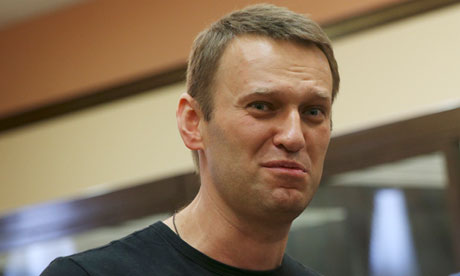
Russian opposition leader Alexei Navalny has returned to Moscow after his surprise release from prison, and says he will continue his campaign for mayor of the capital city.

He and his wife arrived Saturday on an overnight train from Kirov, and were met at the railway station by a crowd of cheering supporters. Navalny told the crowd that he will run in the September 8 mayoral election and would win.

In Kirov Thursday, Navalny was sentenced to five years in prison after a conviction of embezzling $500,000 worth of timber from a state-owned company, while working as an adviser to a provincial governor in 2009. But an appeals court surprisingly released him Friday while he appeals his sentence and runs for office.

Thousands of people in several Russian cities demonstrated against the conviction.

White House officials said Thursday the Obama administration was "deeply disappointed" by the ruling, which it called "the latest example of a disturbing trend aimed at suppressing dissent in civil society in Russia."

European Union foreign policy chief Catherine Ashton said she was concerned about Navalny's conviction and sentence, saying the charges had not been substantiated during the trial.

The 37-year-old opposition leader, who has exposed alleged government corruption, said the charges are politically motivated and intended to silence him.

Last year, Navalny angered President Vladimir Putin by leading mass street demonstrations in Russia's capital.

Navalny also helped organize mass protests starting in 2011 against alleged electoral fraud and Mr. Putin's return to the presidency.
 NEWS SOURCE:http://www.voanews.com

Woman dies while riding Six Flags roller coaster

ARLINGTON, Texas (AP) — A woman riding a roller coaster at a Six Flags amusement park in North Texas died Friday when she fell from a ride that is billed as the tallest steel-hybrid coaster in the world.
The accident happened just after 6:30 p.m. Friday at Six Flags Over Texas in Arlington. Park spokeswoman Sharon Parker confirmed that a woman died while riding the Texas Giant roller coaster but did not specify how she was killed. However, witnesses told local media outlets that the woman fell.
"She goes up like this. Then when it drops to come down, that's when it (the safety bar) released and she just tumbled," said Carmen Brown of Arlington. Brown said she was waiting in line to get on the ride when the accident happened.
Six Flags expressed sadness over the death and said it was temporarily closing the section of the park around the accident site. It didn't say how long the area would be closed. A message left for Parker by The Associated Press was not returned.
"Our thoughts and prayers are with the family and friends during this difficult time," the park's statement said.
The Texas Giant reaches 14 stories high and has a drop of 79 degrees and a bank of 95 degrees. It can carry up to 24 riders. The ride first opened in 1990 as an all-wooden coaster but underwent a $10 million renovation in 2010 to install steel-hybrid rails before reopening in 2011.
Brown said she was next in line behind the woman and saw her being strapped into her seat next to her son.
"We heard her screaming. We were like, 'Did she just fall?'" Brown said.
Arlington police Sgt. Christopher Cook, the department spokesman, referred all questions to Parker. No other details were available.
In another amusement park accident Friday, a boat on an Ohio thrill ride accidentally rolled backward down a hill and flipped over in water when the ride malfunctioned, injuring all seven people on it. Operators stopped the Shoot the Rapids water ride after the accident, which occurred on the ride's first hill, the Cedar Point amusement park in Sandusky, Ohio, said.
In 1999, a 28-year-old Arkansas woman drowned and 10 other passengers were injured when a raft-like boat on the Roaring Rapids ride at Six Flags overturned in 2 to 3 feet of water about 200 feet from the end of the ride.
Six Flags Over Texas opened in 1961 as the first amusement park in the Six Flags system. It is 17 miles west of downtown Dallas.
Copyright 2013 The Associated Press. All rights reserved. This material may not be published, broadcast, rewritten or redistributed.

Alexei Navalny released from custody

A Russian court has temporarily released the opposition leader Alexei Navalny from custody, but placed him under travel restrictions, as he awaits the outcome of an appeal against his five-year jail sentence.
Prosecutors unexpectedly asked for Navalny to be allowed to wait for the appeal decision at home in Moscow after his conviction on embezzlement charges.
The move could be intended to appease opposition activists. On Thursday night, thousands of Russians flooded the main arteries leading to the Kremlin, demanding his freedom and calling for the ousting of the president, Vladimir Putin. Dozens were detained.
Navalny was taken from the courtroom in handcuffs on Thursday after the judge, Sergei Blinov, ended a three-hour verdict reading by finding him guilty. He hugged his wife, Yulia, and was led away by police.
An anti-corruption activist who became the most popular figure to emerge from protests that erupted around Putin's return to the Kremlin last year, Navalny was accused of embezzlement, and a handful of other charges, after Putin unleashed a crackdown on the opposition in the wake of his inauguration.
Navalny has built a large following via corruption investigations into Putin's closest allies that he publicises on his popular social media accounts and blogs. On Tuesday, just two days before the verdict hearing, he released an investigation into alleged corruption at Russian Railways, one of Russia's largest state-run firms, headed by a close Putin ally, Vladimir Yakunin. He has dubbed Putin Russia's "main thief".
The verdict against him – that he embezzled 16m roubles (£325,000) from a timber firm while advising the governor of Russia's Kirov region – is widely seen as a means of silencing him.
He was sentenced alongside a co-defendant, Petr Ofitserov, who was given four years in jail. Ofitserov's wife, and the mother of his five children, sobbed uncontrollably after the sentence was handed down.
As the verdict was being read, Ofitserov wrote on his Facebook page: "I'm getting lots of messages saying: 'hold on, hold on'. Thanks everyone for the support – it helps. But if they jail people like us, then we're not the ones who will have to hold on. It's bad in the cage, but at least it's honest. You'll have to make a more difficult choice – either you're with them or with yourselves."
In Moscow, the centre of last year's anti-Putin protests, Russians erupted in anger at the verdict. Thousands occupied Tverskaya, the main street leading to the Kremlin, as riot police and special forces attempted to break up the gathering. Protesters shouted "Freedom" and erupted into applause as cars honked in solidarity.
In a statement released after the verdict, Mikhail Khodorkovsky, once Russia's richest man and now its best-known political prisoner, wrote that it was "inevitable and predictable" because of Russia's long history of jailing political opponents. Khodorkovsky was arrested 10 years ago on economic charges widely seen to be punishment for his wealth and ability to challenge Putin.
"[U]ntil we realise that the trials of Navalny, Bolotnaya and hundreds of thousands of other guiltlessly convicted people are our trials, they are just going to keep on locking us up, one at a time," he wrote. "The era of unbelief and indifference is ending."
Mikhail Gorbachev, the last Soviet leader, issued a rare statement to condemn the verdict against Navalny, saying it "proves that we have no independent judiciary".
The Russian elite also expressed shock and anger at the verdict.
Alexei Kudrin, a former finance minister who remains close to Putin, wrote on Twitter: "The verdict seems less like punishment and more like it is aimed at isolating him from society and from the election process."
Navalny, who largely appeals to Russia's internet-connected urban youth disillusioned with Putin's increasingly authoritarian politics, was waging a campaign for Moscow mayor in snap elections called for September. He was forced to withdraw his candidacy in the wake of the verdict.
If he serves the entire five-year sentence, he will be released from jail only after Russia's next presidential election, in 2018.

Russian court convicts anti-corruption crusader Navalny

MOSCOW — To no one’s surprise, a judge in the city of Kirov Thursday found Russia’s most effective anti-corruption campaigner guilty of stealing about half a million dollars from a timber company, and sentenced him to five years in prison.
Alexei Navalny, a 37-year-old with a penchant for exposes and cutting jibes, has said since before his trial began in April that he expected to be convicted on what he and his legions of supporters contend are trumped-up charges.His case is the most prominent of a series of criminal prosecutions that Russian authorities have launched against their critics.
Prosecutors asked for a six-year term for Navalny, and a lesser term for a co-defendant. Navalny had been hoping for a suspended sentence.
Shortly after noon, Judge Sergei Blinov, 35, gave Navalny a five-year sentence and the co-defendant, Pytor Ofitserov, a four-year term. He ordered both men put into custody. Blinov, who commuted to the court in Kirov from a village 35 miles away, now has a record of no acquittals in 131 cases. At Navalny’s fiery closing statement two weeks ago, he kept his head down, as if finding the words uncomfortable.
“I declare that I and my colleagues will do everything to destroy this feudal order which exists in Russia, to destroy the system of power under which 83 percent of national goods belong to 0.5 percent of the population,” Navalny had said.
Thursday’s session was attended by a pack of supporters and television crews. Navalny, smiling and relaxed, and sending out an occasional tweet, had left Moscow by overnight train Wednesday evening. Among those present in the courtroom were his wife, his father and the long-time opposition politician Boris Nemtsov.
After hearing the sentence Navalny tweeted his supporters: “OK. Don’t get bored here without me. And most important — don’t dawdle.”
On Wednesday Navalny was registered as a candidate in Moscow’s September mayoral election. The authorities in the capital have been eager to have him in the race, confident that he will lose to the incumbent, Acting Mayor Sergei Sobyanin. Conviction won’t necessarily bar him from running, as long as his appeals have not been exhausted.
“No one is thinking about surrender,” his press secretary, Anna Veduta, said Wednesday as his staff was preparing for the court session in Kirov. Referring to the ruling United Russia party, which Navalny memorably labeled the “party of crooks and thieves,” Veduta said, “These cheaters expect us to give up, close down the office and go home to cry. This will never happen.”
If Navalny goes to prison, she said, “he will in any case search for ways to contact us and give orders. The best that we can do for him is to continue working as hard as we are now.”
Navalny’s supporters had called his prosecution a decisive moment for the protest movement.
“Putin’s team made an art of stealing from construction sites,” he said in a recent interview. “That — and oil — is a very good source of money for the team . . . Putin will be president forever. He understands if he leaves he will go to jail, and he will resist to the end.”
Now, Navalny, said, the only way for Putin to hang on to power is through repression.
Navalny began coming to public notice about four years ago when he began his web-based anti-corruption campaign. He emerged as one of the most charismatic leaders of the protest movement when demonstrations against rigged elections broke out in December 2011.
Grigory Golosov, a St. Petersburg political scientist, calls him a natural politician with the instincts to make him a leader.
“Show me another person who, acting almost alone, has been able within a year to deal a tangible blow to a political monopoly of such magnitude,” Golosov wrote before the trial began, saying Navalny has a rare gift of communication. “After two decades of unbridled political ridiculousness he has largely rehabilitated political debate as a meaningful.”
Navalny was charged with theft from a deal he arranged in 2009 when he was an assistant to the governor in Kirov — he found a middleman to buy timber from a struggling logging company. Because the middleman then made a profit on the timber, the prosecution has charged that Navalny effectively deprived the lumber company of nearly $500,000, by getting it to agree to sell below market value.
Late Tuesday, Navalny posted his latest expose — of the head of the government-owned Russian Railways, Vladi­mir Yakunin. He alleged that Yakunin has funneled millions of dollars of public money into companies run by his wife and sons, many of them based offshore.